Call/Text (251) 979-9396 or Click Here to Book Now!
Summer in Baldwin County is not just hot. It is relentlessly humid. Between Daphne and Gulf Shores, residents living near Highway 59 or the Beach Express feel the compound effect of coastal humidity and salt air. On a day when outdoor temperatures hit the mid-90s and the heat index pushes past 105 degrees, your air conditioner is not merely cooling the house. It is running constantly to battle moisture-laden Gulf breezes. That continuous runtime is exactly why we are seeing a spike in calls for “AC drain pan overflowing Daphne” and catastrophic attic leaks.
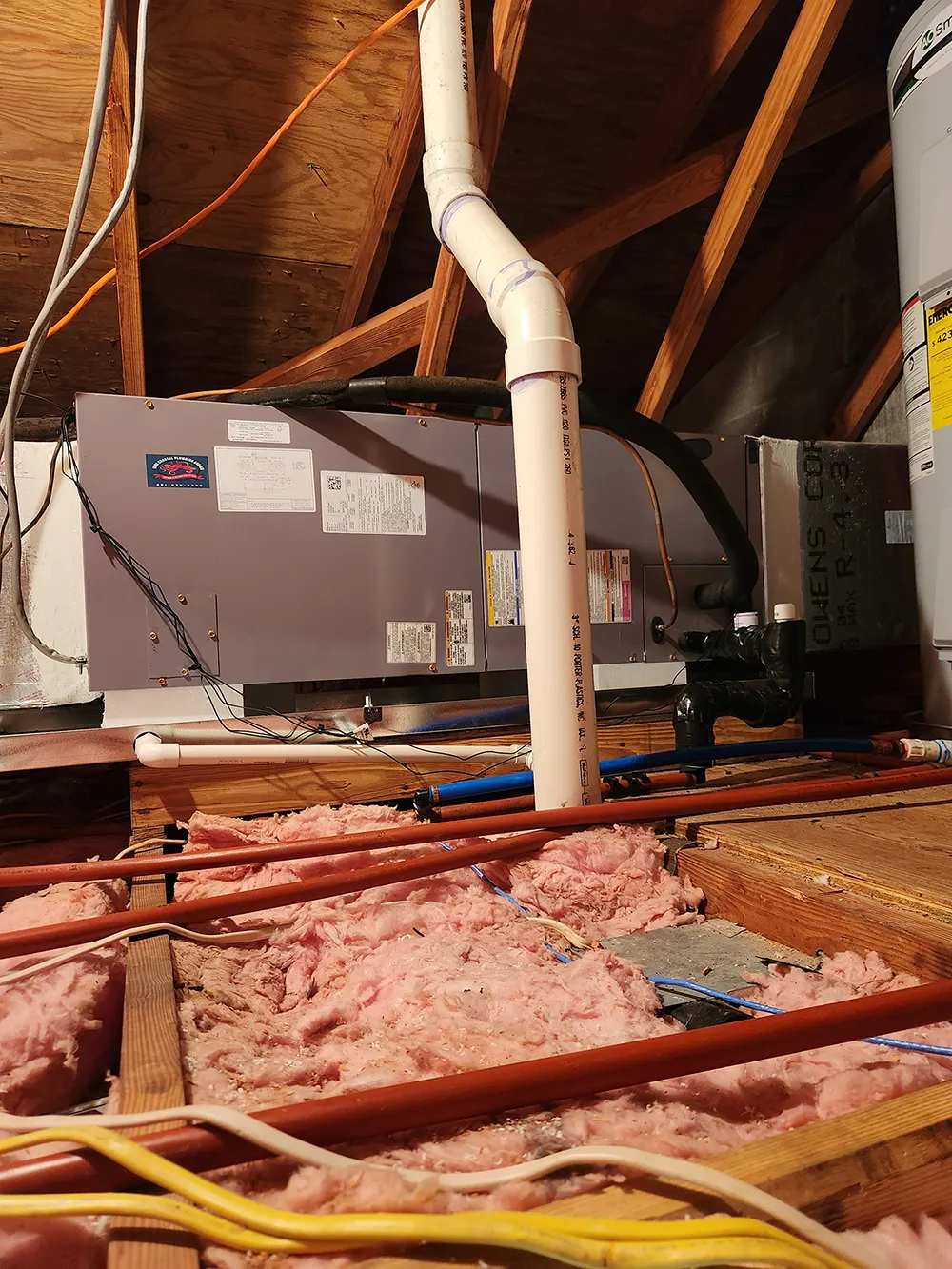
An air conditioner’s evaporator coil cools the air, and humidity in that air condenses on the coil. That condensate drips into the drain pan and exits the home through the condensate drain line, or is lifted out by a condensate pump if your unit sits in an attic. This is a simple, gravity- or pump-driven system that depends on clear flow. In Baldwin County’s summer conditions, two things combine to break that flow. First, higher humidity combined with longer run times: when the mercury and humidity spike together, your AC runs longer and more continuously. That produces far more condensate than during mild weather. Second, coastal algae and biofilm growth: warm, stagnant water left in condensate lines breeds bacteria, mold, and algae. In our salt-air environment, biofilm forms rapidly. That organic slime narrows the drain pipe, turns the line into a partial dam, and makes clogs inevitable if the line is not serviced regularly.
On a marginally clogged drain, increased condensate volume from weeks of mid-90s temperatures is enough to overwhelm the system. A small partial blockage that would pass condensate on a 75-degree day becomes an absolute choke on a 95-degree day of coastal humidity. As condensate backs up, the pan fills, and once the pan overflows, if the unit is in the attic, that water has only one direction to go: through insulation and into your ceiling. Imagine walking into your living room after a long hot day and seeing a brown circular stain forming on the ceiling, or worse, a sagging bubble of drywall weighing down from trapped water. That is the initial sign of an attic overflow. Inside the attic, insulation will be saturated; ceiling joists and drywall will begin to lose structural integrity. If the water finds recessed lights or wiring, the scene turns from a water damage claim into an electrical hazard and potential fire risk.
Drywall saturated by condensate is not just cosmetic damage. Wet drywall loses tensile strength and can collapse under its own weight. Insulation saturated with condensate must be removed and replaced; otherwise it breeds mold and loses R-value. Wooden framing and sheathing exposed to repeated wetting begin to rot, and concealed mold colonies form behind ceilings and inside walls, which is a serious health and remediation expense. In many Gulf Coast homes from Daphne down through Orange Beach and Robertsdale, attic AC units are common. That location turns a clogged condensate line into an attic leak with exponentially higher remediation costs.
If you see evidence of an overflowing pan: turn off the HVAC at the thermostat or breaker to stop further condensate production. Safety first if water is near wiring. Contain the drip by placing buckets and tarps under active leaks and moving valuables away from the dripping zone. Avoid standing on soaked ceilings or attempting ceiling repairs yourself. A saturated drywall can collapse suddenly. Call a licensed HVAC specialist immediately to diagnose and clear the blocked condensate line, inspect the pan and pump, and assess attic and ceiling damage. If you are in Daphne, Foley, Gulf Shores, Orange Beach, or anywhere in Baldwin County and dealing with an AC drain pan overflow, especially during these dangerous summer heat days, you need fast, experienced help. Book online or call Gone Coastal Plumbing and Air to dispatch a certified technician right away.
In Daphne and the rest of Baldwin County, the summer air is not just hot. It is aggressively humid. Coastal humidity, salt air, and frequent daytime temperatures in the mid-90s with heat indices near 105 to 108 degrees on the worst days force central air systems to run nearcontinuously. The evaporator coil in your attic air handler is extracting huge amounts of moisture from the indoor air, producing large volumes of condensate. More condensate combined with warm, nutrient-rich stagnant water in drain lines creates the perfect environment for rapid biofilm growth and clog formation.
Stage 1: Normal operation with early biofilm. Under normal summer conditions, condensate drips from the coil into the drain pan and flows by gravity (or pump) through the condensate line to a floor drain, utility sink, or exterior discharge. In Baldwin County’s warm, humid summer, even a properly flowing line will develop a thin biofilm layer of bacteria, algae, and mold within weeks of the season starting.
Stage 2: Partial clog formation. As biofilm accumulates, the effective diameter of the drain line narrows. Algae mats, dust, and debris from the air handler combine to form a soft, gelatinous plug. At moderate condensate production rates (cooler days, lower humidity), the line may still drain adequately, masking the problem.
Stage 3: Condensate volume surge. When outdoor temperatures climb into the mid-90s and the heat index pushes past 105 degrees, the system runs continuously. Condensate production increases dramatically. A line that was marginally passing flow at lower production rates now cannot keep up. The drain pan begins to fill.
Stage 4: Pan overflow and water intrusion. Once the primary drain pan fills, water overflows. In an attic installation, that water soaks into insulation, runs along ceiling joists, and finds the path of least resistance into the living space below. Secondary drain pans (if present) may catch some overflow, but if they are also clogged or improperly sloped, they fail too.
Stage 5: Structural and electrical damage. Saturated insulation loses R-value and becomes a mold incubator. Drywall absorbs water, loses strength, and can collapse. If water contacts recessed lighting, wiring, or junction boxes, the risk of electrical short-circuit and fire increases significantly.
Turn off the system at the thermostat immediately. Do not run the AC while the drain is blocked. Place buckets and waterproof sheeting under active ceiling drips. Do not attempt to clear the condensate line yourself with chemicals; those products corrode PVC and can damage the system. A wet-dry vac applied to the exterior termination of the condensate line (after power is off) can provide temporary relief, but a professional inspection is required to clear the clog properly and assess damage. Book online or call Gone Coastal Plumbing and Air for fast, professional condensate drain service and attic inspection across Daphne, Foley, Gulf Shores, Orange Beach, and all of Baldwin County.
We offer 24/7 emergency services! Our team is ready and eager to assist you with any inquiries you may have. At Gone Coastal, nothing is beyond our reach.