Call/Text (251) 979-9396 or Click Here to Book Now!
Water under your house is either a plumbing leak or water getting in from outside, and those are two different trades. We repair the plumbing under there: supply lines, drain lines, sewer laterals. We do not do encapsulation, vapor barriers, piers or structural work. Telling the two apart is the whole job.
Search "crawl space repair" in Foley and you get encapsulation companies. But much of Baldwin County's older housing sits on pier-and-beam, and the pipe under it is plumbing.
A water bill that climbed with no change in use. Same habits, higher bill, usually ignored.
A soft or sagging spot in a floor. Damp subfloor loses strength, so you feel it before you see it.
A musty smell in one room. Odor rises through the floor above wet ground.
A warm spot on the floor. A hot line losing water, and in a slab home the classic slab leak symptom.
A meter that creeps with everything off. The most useful test you can run yourself.
Standing water, or ground that never dries. By then it has run a while.
Turn off every fixture: faucets, washing machine, dishwasher, irrigation timer, and the ice maker, which people forget.
Find the meter, usually in a curb box. Look for the low-flow indicator, a small triangle, star or dial beside the main numbers. It moves on the smallest flow the meter detects.
If it turns with the house off, water is leaving your system. Note the reading anyway, wait a half hour without touching water, then read again. Any change means a leak.
Then narrow it. Close the main shutoff at the house and check again. If the indicator stops, the leak is past that valve, so inside or under the house. If it keeps moving, it is the buried service line, a hidden underground leak.
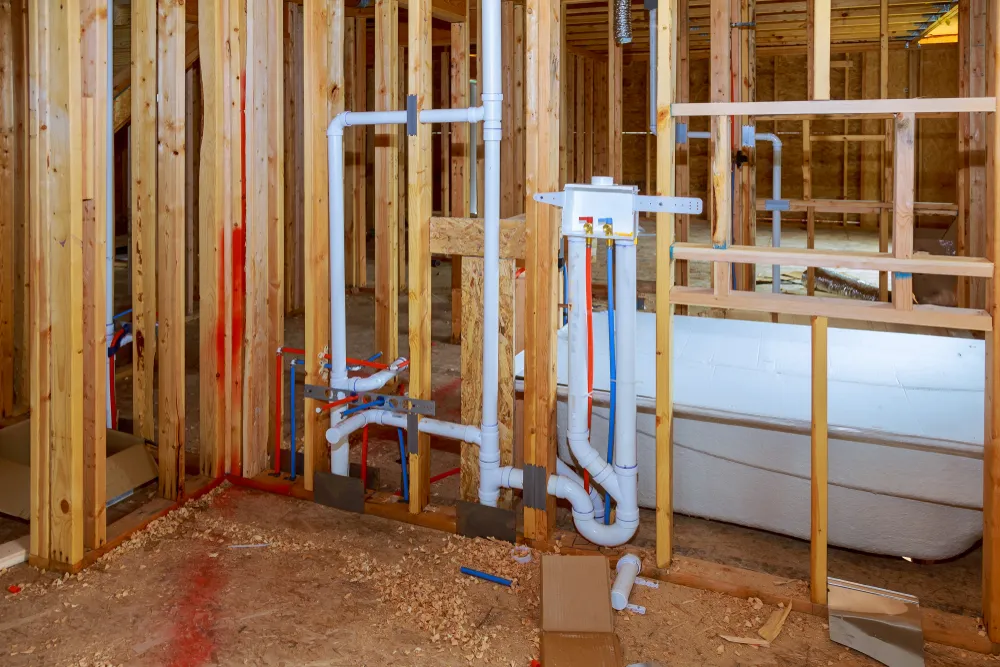
Supply lines and their fittings. Pressurized every second of the day, so the leak never pauses. Fittings and elbows fail before straight pipe does, and a crawl space run is full of them.
Drain and waste joints. Not pressurized. They carry water only when something upstairs runs, so a bad joint drips during a shower, then goes quiet. That is why they hide for years.
The sewer lateral. A break gives persistent wet ground and odor, and a camera confirms it. That is sewer line repair work.
Under a pier-and-beam home the pipe hangs in open air, exposed to humidity, salt air and cold snaps, but reachable. In a slab home those lines sit in or under concrete, water surfaces wherever it finds a path, and access means opening the slab.
A pressurized leak runs constantly and saturates the soil your piers sit on. Call today. A drain leak is intermittent, so damage builds over months, not days. It still rots framing, but you can schedule it. Water on a ceiling below is its own diagnosis.
The space under a Gulf Coast house in July is brutal, and heat, humidity and dead air shorten the time anyone wants to spend down there.
October is cooler and drier. We can trace the full run of pipe instead of the reachable part, and the repair lands ahead of the first cold snap, the concern in our freeze prep guide.
Two sources, two trades. A plumbing leak, supply, drain or sewer, is ours. Water from outside, meaning groundwater, grading that slopes toward the house, gutters dumping at the foundation or a failed vapor barrier, is not.
Here is how we separate them. We close the main and watch whether the meter stops and the ground dries out. We pressure-test the supply side. We run fixtures one at a time, looking for a joint that weeps only when a drain is in use. We camera the lateral if odor points there. Then one question: does it get worse after you use water, or after it rains?
If the plumbing tests clean and the water tracks with rainfall and grade, the problem is drainage or structural. That is a foundation or drainage contractor's work, and we will say so rather than sell you leak detection you do not need.
SymptomLikely sourceWho to callUrgencyMeter creeps, everything offPressurized supply leakPlumberTodayWet only after a fixture runsDrain or waste jointPlumberThis weekSewer odor, wet trackSewer lateral breakPlumberDays, not weeksWet after rain, dries betweenGroundwater, gradingDrainage contractorPlan itDamp under the air handlerHVAC condensateHVACSoonCracked piers, sloping floorsStructural movementFoundation contractorEvaluate
This section costs us calls, but wasting your money is worse.
Condensation. Warm humid air meets a cold line and water beads on the pipe. One customer was certain they had a leak; it was condensation from an uninsulated ice maker line. The tells: the meter does not move, the dripping tracks humidity rather than use, and the pipe is wet along its length, not at one point. Insulation fixes it.
Groundwater after heavy rain. A low-lying crawl space takes on moisture with nothing wrong with the plumbing. If water arrives with the rain and dries afterward, look at gutters, downspouts and the grade.
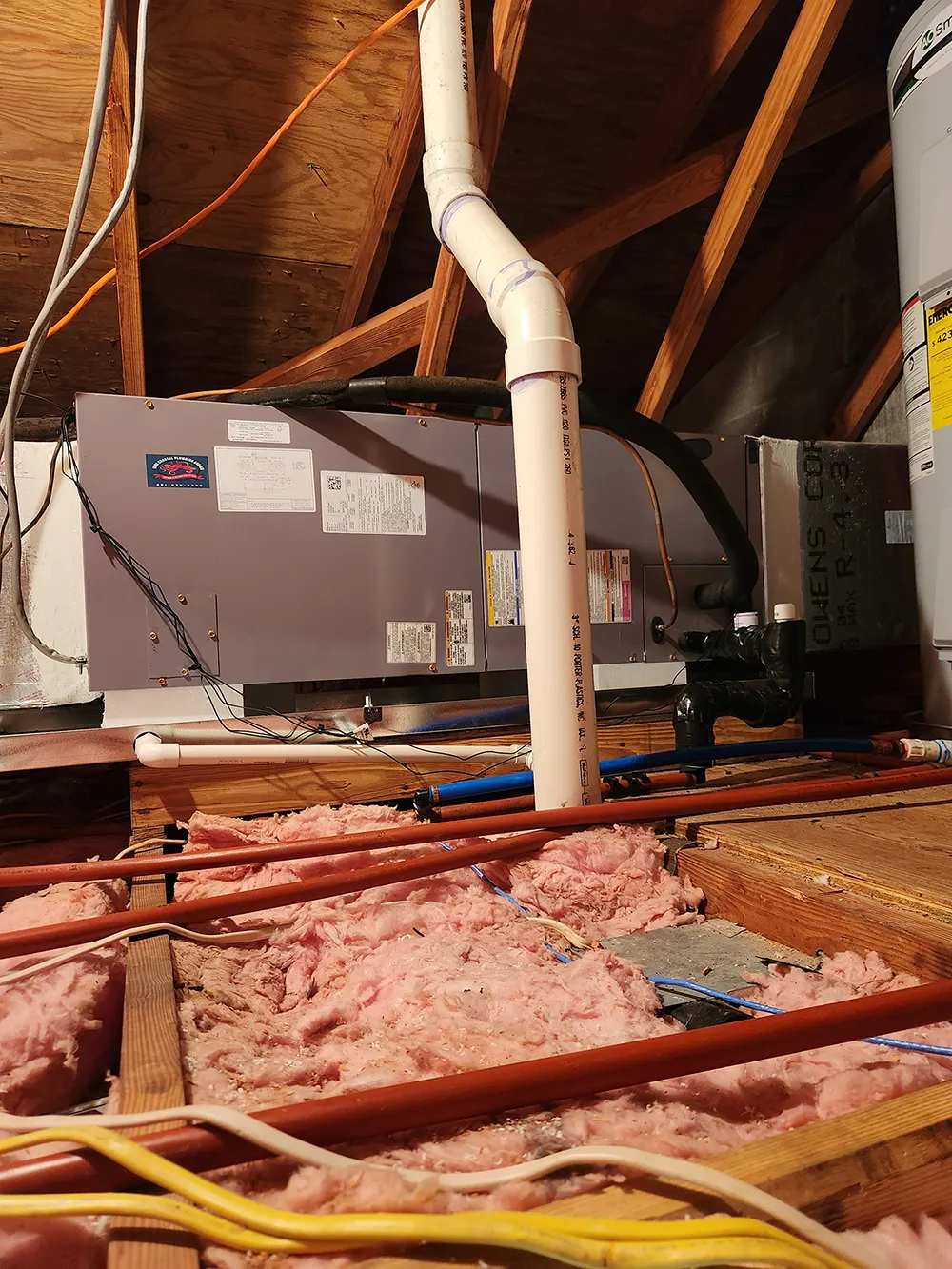
An HVAC condensate line discharging underneath. Air conditioning pulls a real volume of water out of the air here, and a line that is broken, disconnected or terminated under the house adds water every day it runs. Suspect it when the damp sits under the air handler and follows run time, not water use.
Rule those three out first. If it is plumbing, start with leak detection or plumbing services. Old pipe rather than damaged pipe is a repipe conversation. We serve Foley and Baldwin County.
Shut off every fixture, including the ice maker and irrigation, then watch the meter's low-flow indicator. If it moves, you have a pressurized leak. If it does not, and the water shows up after rain rather than after use, suspect groundwater or drainage instead.
No. We repair the plumbing under your house: supply lines, drain and waste lines, and sewer laterals. Encapsulation, vapor barriers, piers and structural repair are a different trade, so if that is what you need, a foundation contractor is the right call.
Moisture under a house comes from more than pipes. Groundwater after heavy rain, a failed vapor barrier, an HVAC condensate line discharging underneath and plain Gulf Coast humidity all raise it. Rule out a plumbing leak with the meter test, then look at drainage.
Usually, yes. Pipe under a pier-and-beam home hangs in open air, where it can be inspected, isolated and pressure-tested. Slab homes are harder, because the line sits in or under concrete and water surfaces wherever it finds a path, not where the break is.
Fall is the window. Working under a Gulf Coast house in July is punishing, which limits how thoroughly anyone can trace a line. In October it is cooler and drier, the whole run can be inspected, and the repair lands before the first cold snap.
Twenty-plus years under houses in Foley, Gulf Shores and Robertsdale says most people guess wrong about what is wet down there. Let us look, tell you straight, and fix it if it is plumbing. Nothing is beyond our reach.
We offer 24/7 emergency services! Our team is ready and eager to assist you with any inquiries you may have. At Gone Coastal, nothing is beyond our reach.