Call/Text (251) 979-9396 or Click Here to Book Now!
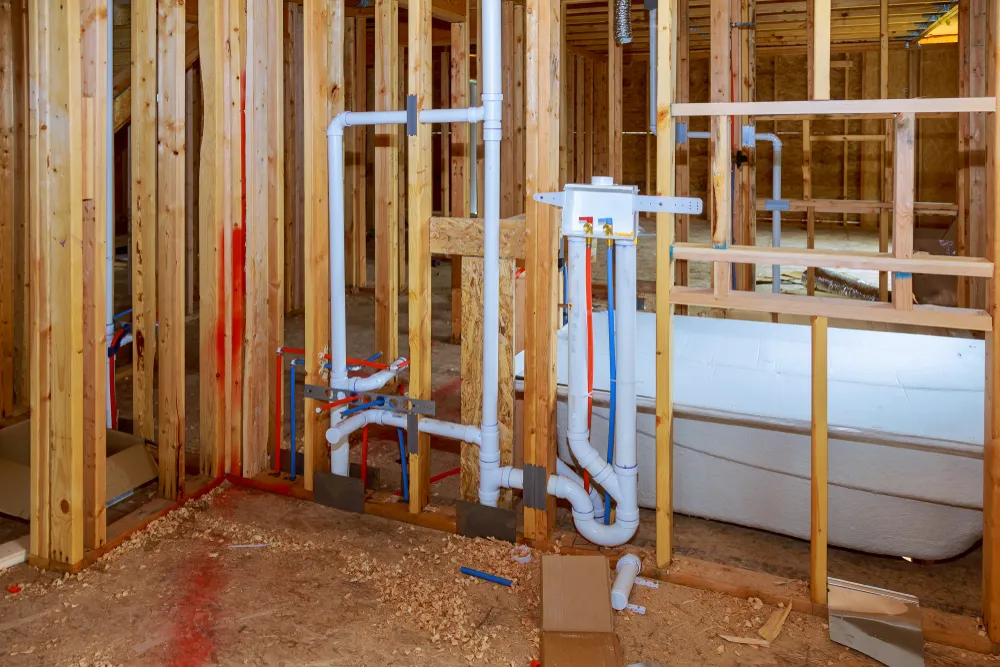
New construction plumbing happens in three stages: underground work before the slab is poured, rough-in (often called top-out) before insulation and drywall, and trim-out once the finishes are in. Each stage is inspected before the next can start. The decisions that matter most, like water heater type and location, where every fixture goes, and how pipe is routed on an elevated coastal home, have to be made before the first stage. After the concrete is poured or the walls are closed, every change costs real money.
Gone Coastal Plumbing and Air works with builders, general contractors and owner-builders across Baldwin County. One customer put it simply: "Gone Coastal plumbed our entire custom home construction in 2023... so we haven't had any plumbing problems to call them about." That is the goal of new construction plumbing. Done right, you forget it exists.
Each stage is inspected by the local building department before work can move on. Inside Foley, Gulf Shores, Orange Beach, Daphne or Fairhope city limits, that is usually the city. In unincorporated areas, it is Baldwin County. Your builder or plumber should be handling the permit and scheduling the inspections.
This is the list we wish every owner had in hand at the first meeting. Every item is easy at the drawing stage and expensive afterward.
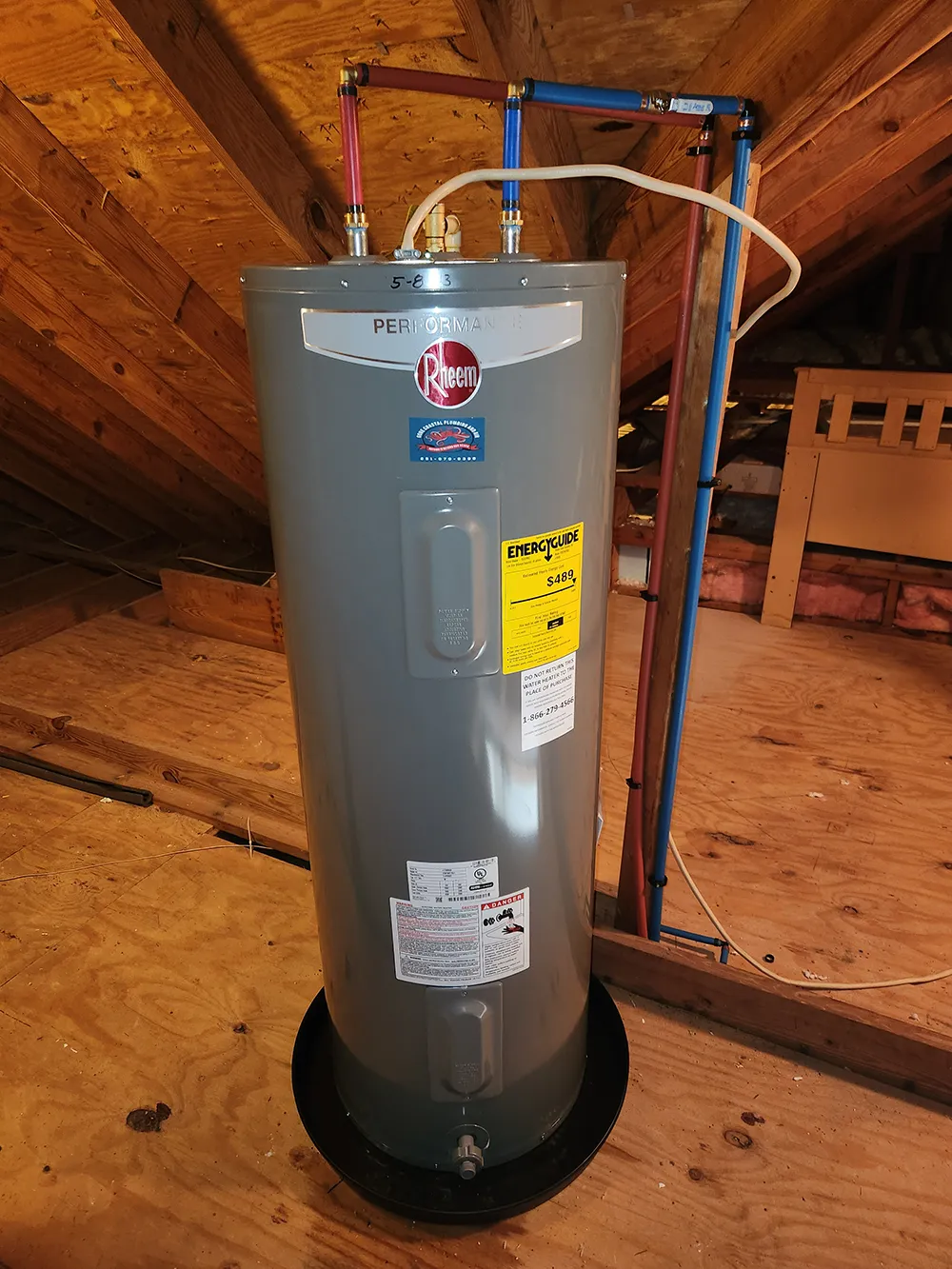
Tankless or tank is not just a preference. A gas tankless unit needs the right gas line size and a venting path. A whole-home electric tankless unit draws a large electrical load and often requires more panel capacity than a standard tank. Both have to be planned with the electrician and gas installer, not added at trim-out. Warm Gulf Coast groundwater makes tankless a stronger option here than in colder climates, but the decision has to be made early. Location matters too: a water heater close to the main bathrooms means less waiting for hot water.
Island sink or not. Freestanding tub or alcove. Where the washer goes. A pot filler. A wet bar. A second laundry hookup. Fixture locations drive drain slopes under the slab. Moving a toilet 18 inches after the pour can mean jackhammering concrete.
Outdoor showers, hose bibs on every side of the house, a rinse station for fishing gear or beach chairs, and a dedicated line for a future pool or outdoor kitchen. These are standard asks on the coast and much cheaper to stub out during rough-in than to add later.
Coastal Baldwin County municipal water is naturally soft but can carry iron and sediment, and private wells inland can be very different. If you think you will want whole-house filtration, leave a loop and space for it near where the main line enters the house.
A main shut-off you can find in the dark, and individual shut-offs at every fixture. If you are using a manifold system, put it somewhere accessible, not behind a finished wall.
Many Baldwin County lots, especially lower-lying and waterfront ones, use a grinder pump instead of a gravity sewer connection. Your sewer provider and the site's elevation decide which you need. If it is a grinder pump, plan the pump location, power supply and alarm placement with the plumber so the alarm is somewhere you will actually see and hear it.
Much of the new construction in Gulf Shores, Orange Beach, Fort Morgan and other flood zones is built on pilings. That changes how plumbing should be run.
FEMA's coastal construction guidance (Home Builder's Guide to Coastal Construction, Technical Fact Sheet 29) recommends attaching plumbing risers on the landward side of interior piles, running plumbing inside the floor joists where possible for protection, and never attaching plumbing to breakaway walls. Breakaway walls are designed to fail in a storm surge. Pipe attached to them goes with them.
Freeze protection is the other coastal detail that gets skipped. Pipe that runs through the open space under an elevated home is exposed on all sides. In January 2025, Mobile dropped to 6°F, according to the National Weather Service, and in November 2025 the area set a record low of 28°F. Insulating and protecting exposed runs during construction costs little compared to repairing a burst line under a finished house.
Whether you are a builder or an owner-builder, ask these questions:
We cannot quote a typical price for new construction plumbing, because the honest answer depends on fixture count, square footage, slab or pilings, water heater choice, grinder pump requirements and finish level. The drivers above are what shape a quote.
If you are working with a builder who has a plumbing subcontractor they trust and have used for years, that is often the right arrangement. Builders coordinate trades every day, and a plumber already in their rhythm can keep a schedule moving. Your job in that case is not to replace the plumber. It is to make sure the decisions in this article are made before rough-in, in writing.
Where an owner's own plumber makes sense: owner-builder projects, custom homes with complex systems, or when you want the same company for construction and long-term service.
They usually mean the same stage. Rough-in, or top-out, is the plumbing installed after framing and before insulation and drywall: supply lines, drains, vents and valve bodies inside the walls. It is inspected before the walls are closed, which is why every fixture location needs to be final by then.
Most new homes have at least three: the underground inspection before the slab is poured, the rough-in inspection before walls are closed, and a final inspection after fixtures are set. The local building department decides the exact sequence, so check with your city or Baldwin County for your lot.
It is worth considering, because warm Gulf Coast groundwater helps tankless units perform well. But it must be decided before rough-in. Gas tankless needs proper gas sizing and venting, and whole-home electric tankless often needs more panel capacity. Adding either at trim-out is far more expensive than planning for it.
Some do and some do not. It depends on the lot's elevation, the distance to the sewer main, and your sewer provider's requirements. Many waterfront and low-lying lots use grinder pumps. If yours needs one, plan the pump location, electrical supply and alarm placement during design.
FEMA coastal construction guidance recommends running risers on the landward side of interior piles, keeping runs inside floor joists where possible, and never attaching plumbing to breakaway walls. Exposed pipe under an elevated home also needs freeze protection, since Baldwin County has seen single-digit cold as recently as January 2025.
Use the Alabama Plumbers and Gas Fitters Examining Board's online licensee search. It lets you look up an individual plumber's certification. Ask your plumber for their license number before any work starts, and confirm it yourself rather than taking it on faith.
Gone Coastal Plumbing and Air partners with builders, contractors and homeowners on new construction across Foley, Gulf Shores, Orange Beach, Daphne, Fairhope, Robertsdale, Silverhill, Fort Morgan, Elberta, Perdido Beach, Lillian, Summerdale and Magnolia Springs. Licensed Alabama master plumber MP-3978, BBB accredited, 20+ years in the trade.
Call/Text (251) 979-9396 or Click Here to Book Now!
Related reading:
We offer 24/7 emergency services! Our team is ready and eager to assist you with any inquiries you may have. At Gone Coastal, nothing is beyond our reach.