Call/Text (251) 979-9396 or Click Here to Book Now!
Before anyone drinks or showers in a place that sat closed all summer, flush every fixture, hot and cold, until the hot side reaches maximum temperature, and refill every drain trap. The caveat: most of that is a homeowner job, and a plumber earns the call only in the four cases below.
The Gulf Shores and Orange Beach tourism bureau puts snowbird season at January through March, with many early arrivals coming down in October and November. So thousands of Baldwin County condos and second homes are about to be reopened.
The CDC's guidance for reopening buildings after a prolonged shutdown names three hazards in unused water systems: mold, Legionella, and lead or copper leaching.
Municipal water carries a disinfectant residual, usually chlorine, that keeps bacteria in check. Water sitting still for weeks loses it, reaching what the CDC calls low or undetectable levels of disinfectant. Stagnation also turns water corrosive, pulling metal out of the pipe.
Timeframes vary by building: mold in days to months, Legionella in weeks or months, lead and copper in hours to months.
Temperature. Legionella grows in water between 77 and 108°F.
Picture a closed condo in Gulf Shores in July, AC off or set high because nobody is there. The water in the supply lines, the heater and the branch to the guest bath is neither cold nor hot. It sits in that band for months, with no disinfectant left.
That guidance was written for offices and schools. Nobody has pointed it at the seasonal-home pattern that defines this coast, where much of the housing in Orange Beach, Fort Morgan and Perdido Beach sits empty for part of every year.
Flush hot and cold through every point of use until the hot water reaches maximum temperature, with hot water at the tap at or above 120°F. Set heaters to at least 140°F, per manufacturer specifications.
Every point of use means every one: sinks, tubs, showers, the outdoor rinse shower, hose bibbs, the ice maker line and the appliance supplies. A skipped branch reseeds the rest.
Then the step everyone skips: minimize splashing and aerosol generation. Legionella is inhaled, not swallowed, in droplets fine enough to reach deep into the lungs, and a shower head blasting into an empty tub turns water into breathable mist. Keep flow low, pull aerators so water falls rather than atomizes, and leave the room with the fan on.
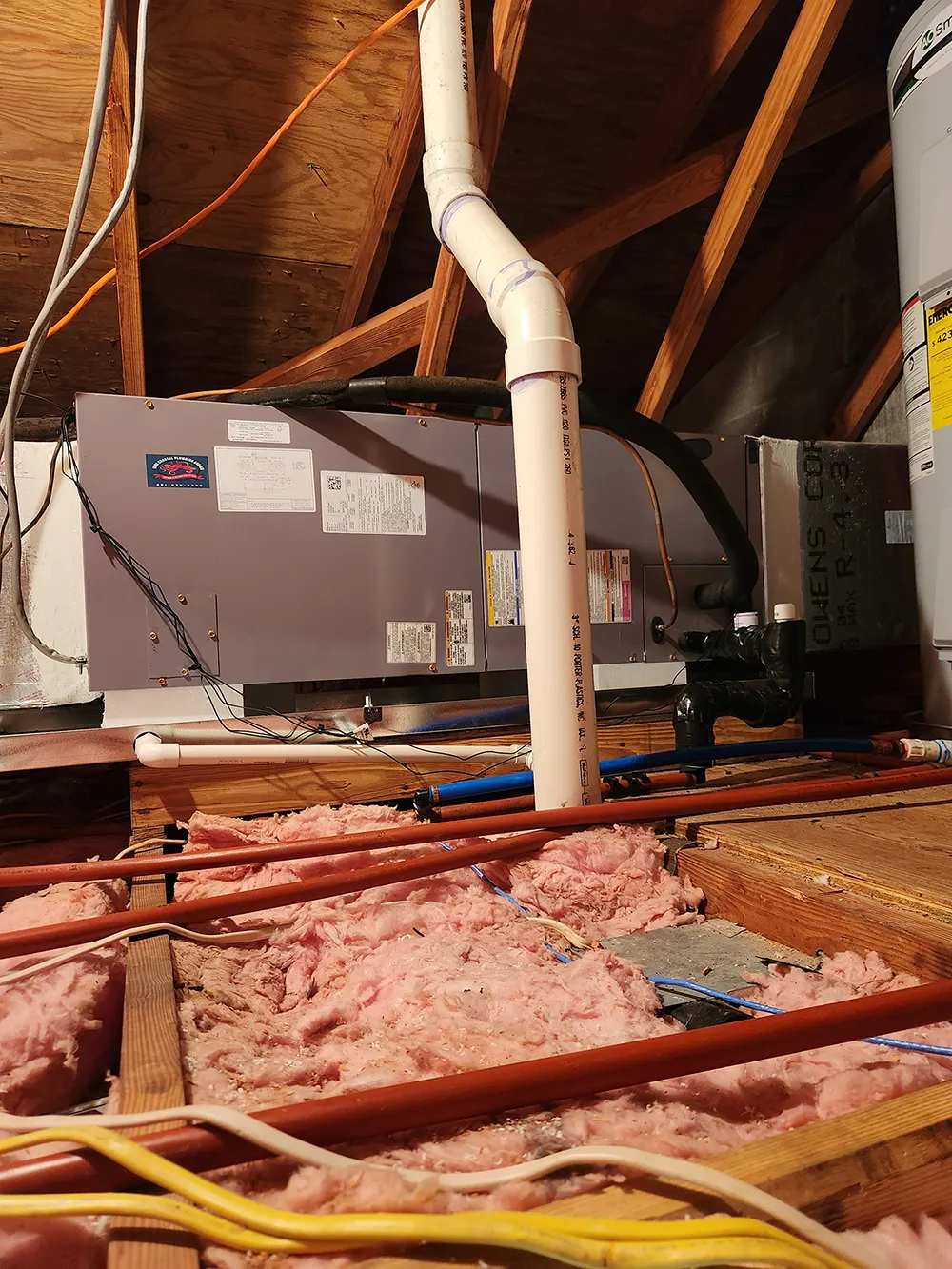
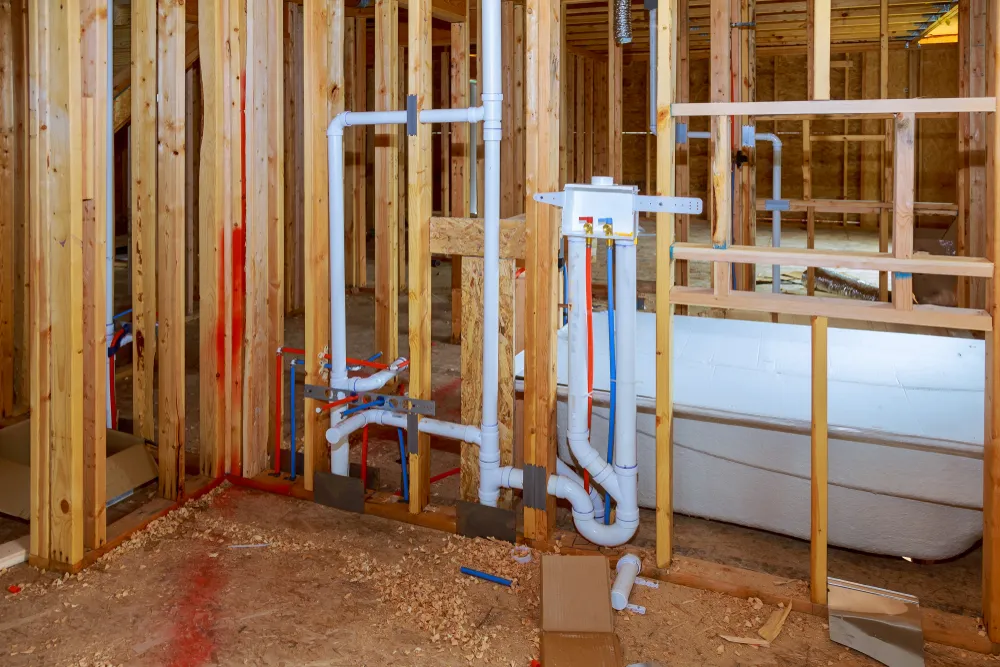
A P-trap holds a plug of water that blocks sewer gas, and it lasts only as long as something refills it. In a fixture nobody used all summer it evaporates, the trap seal is gone, and gas has an open path inside.
The suspects are the ones nobody touches: the guest bath, the laundry standpipe, the utility floor drain. People smell it and blame the building. Run every fixture and pour water down every drain. If it survives a day, suspect venting.
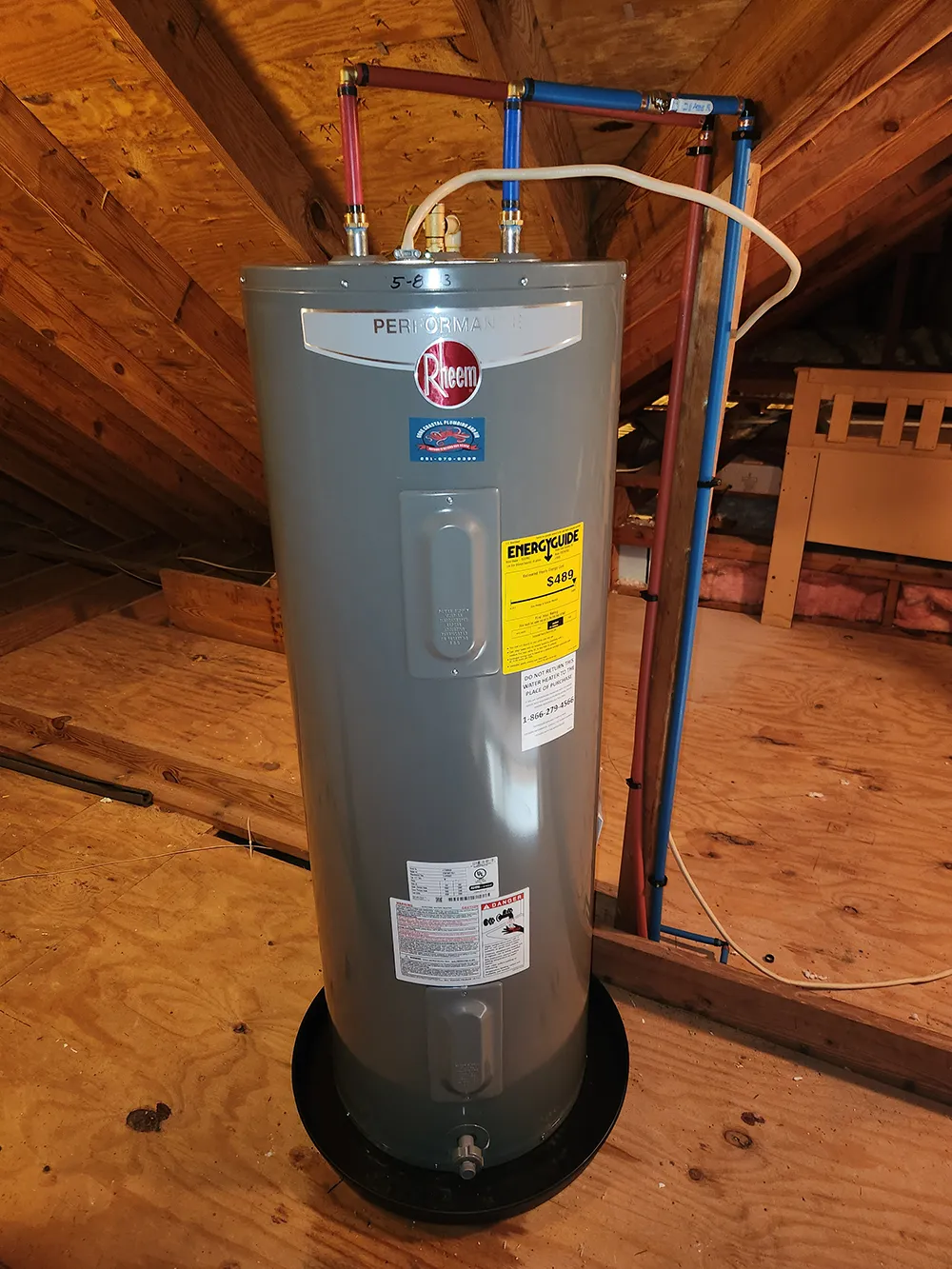
It has been holding lukewarm water in the dark for months, close to ideal for the bacteria the CDC describes.
Check sediment, since minerals and iron settle out of water nobody turns over. Check the anode rod, the sacrificial metal that corrodes so the tank lining does not, often spent on a part-time property. Check the setting, since seasonal heaters get turned down.
If yours was off, let it reach full temperature before flushing the hot side. If it is old, evaluate it now, not the week the family arrives. See our water heater replacement service.
Valves seize from disuse. An older multi-turn stop in a humid coastal cabinet often will not budge, and a snapped handle is how you find out. See corroded under-sink shutoff valves.
Braided supply lines are the other reoccupancy failure, and washer hoses let go once laundry runs again. See preventing washing machine hose failures.
The ice maker line is small, forgotten and often uninsulated. We get called for a puddle the owner is sure is a leak, and it is condensation from an un-insulated ice maker line.
Doing this out of order is how a unit floods.
TimingStepRisk it addressesTwo weeks outConfirm water on, heater at 140°FUnseen leak, bacteria in a warm tankArrival day, firstInspect dry, pressurize with stops closedA line failure flooding the unitArrival dayFlush every point of use, cold then hotLost disinfectant, Legionella, leachingArrival dayRefill every trap and standpipeSewer gas through unused fixturesArrival dayRun appliances empty, dump early iceStagnant water in appliancesFirst weekExercise shutoffs, replace old hoses, insulate the ice lineSeized stops, burst hoses, false leak callsFirst weekStill discolored? CallCorrosion or a building problem
Most of the time, honestly. Flushing is a homeowner job: an afternoon of patience, not a license. Refilling traps is pouring water down drains.
Skip the call if the unit was occupied through the summer, since that water was never stagnant, if your property manager flushes on a documented schedule, or if the place was closed for weeks rather than a season.
Four situations genuinely warrant a professional:
One boundary: visible mold is remediation work, a different trade. We fix the plumbing that caused the moisture, not the mold itself.
It depends on the building. The CDC gives ranges: mold in days to months, Legionella in weeks or months, lead and copper in hours to months. A Gulf Coast condo closed for a summer falls inside all three windows, which is why flushing matters.
Almost always a dry P-trap. The water sealing an unused drain evaporates over months, and once that seal is gone, sewer gas rises through guest bathrooms, floor drains and laundry standpipes. Run every fixture, then pour water down every drain. If it persists, call.
Yes, at the main, if your building allows it. A closed valve means a failed supply line floods nothing. It does not stop stagnation in lines already full, so you still flush on reopening, but it removes the worst outcome.
CDC guidance for buildings after a shutdown says at least 140°F, per the manufacturer's specifications. That runs above typical comfort settings, so if small children or older adults use the unit, add anti-scald mixing at the fixtures rather than lowering the tank.
Many already do, and plenty of rental programs in Gulf Shores and Orange Beach flush on a schedule. Ask yours whether flushing is documented and what it covers. If nobody can say when the water last ran, assume it did not.
If you hit a seized valve, a heater that sat too long, or water that will not clear, we have worked this coast for over 20 years. See our plumbing services, our vacation rental plumbing post and our maintenance Q and A. Nothing is beyond our reach.
We offer 24/7 emergency services! Our team is ready and eager to assist you with any inquiries you may have. At Gone Coastal, nothing is beyond our reach.