Call/Text (251) 979-9396 or Click Here to Book Now!
What is the difference between a tankless and a tank water heater?
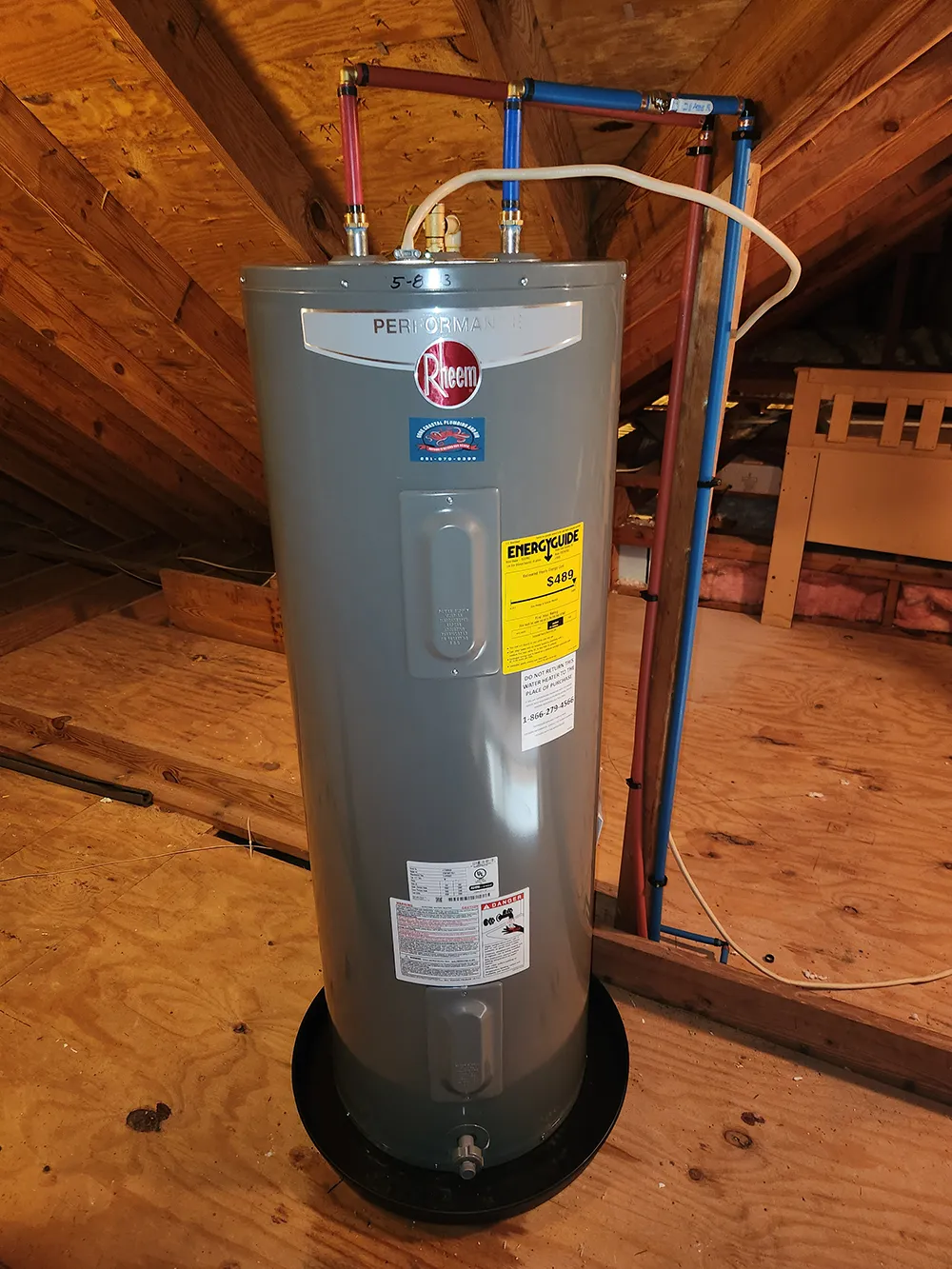
A tank water heater stores 40 to 80 gallons of water and keeps it hot 24 hours a day, whether you use it or not. When the tank runs out, you wait 30 to 60 minutes for it to reheat.
A tankless water heater (also called an on-demand water heater) stores nothing. It fires only when you open a hot tap, heating water as it passes through a heat exchanger. Hot water does not run out — but the flow rate is capped, so the unit has to be sized for how many fixtures you run at once.
Most tankless comparisons are written for homes in Ohio or Minnesota. Two coastal realities flip the conclusion here.
Our incoming water is warm. Groundwater along the Alabama Gulf Coast sits in the neighborhood of 70°F year-round. A tankless unit only has to raise that water about 50 degrees to reach a comfortable 120°F. In a northern state, the same unit is fighting 45°F inlet water and loses roughly a third of its usable flow rate every winter. Tankless performs better in Foley than it does in almost any northern market — you get more simultaneous fixtures out of the same size unit.
Our power goes out. Every tankless water heater, gas or electric, needs electricity to run its igniter and controls. When a storm takes down power in Gulf Shores or Fort Morgan, a tankless system gives you nothing. An older gas tank with a standing pilot light will still hold a tank of hot water for a day or two. If riding out storms without evacuating matters to your household, that is a genuine trade-off worth weighing — not a detail to gloss over.
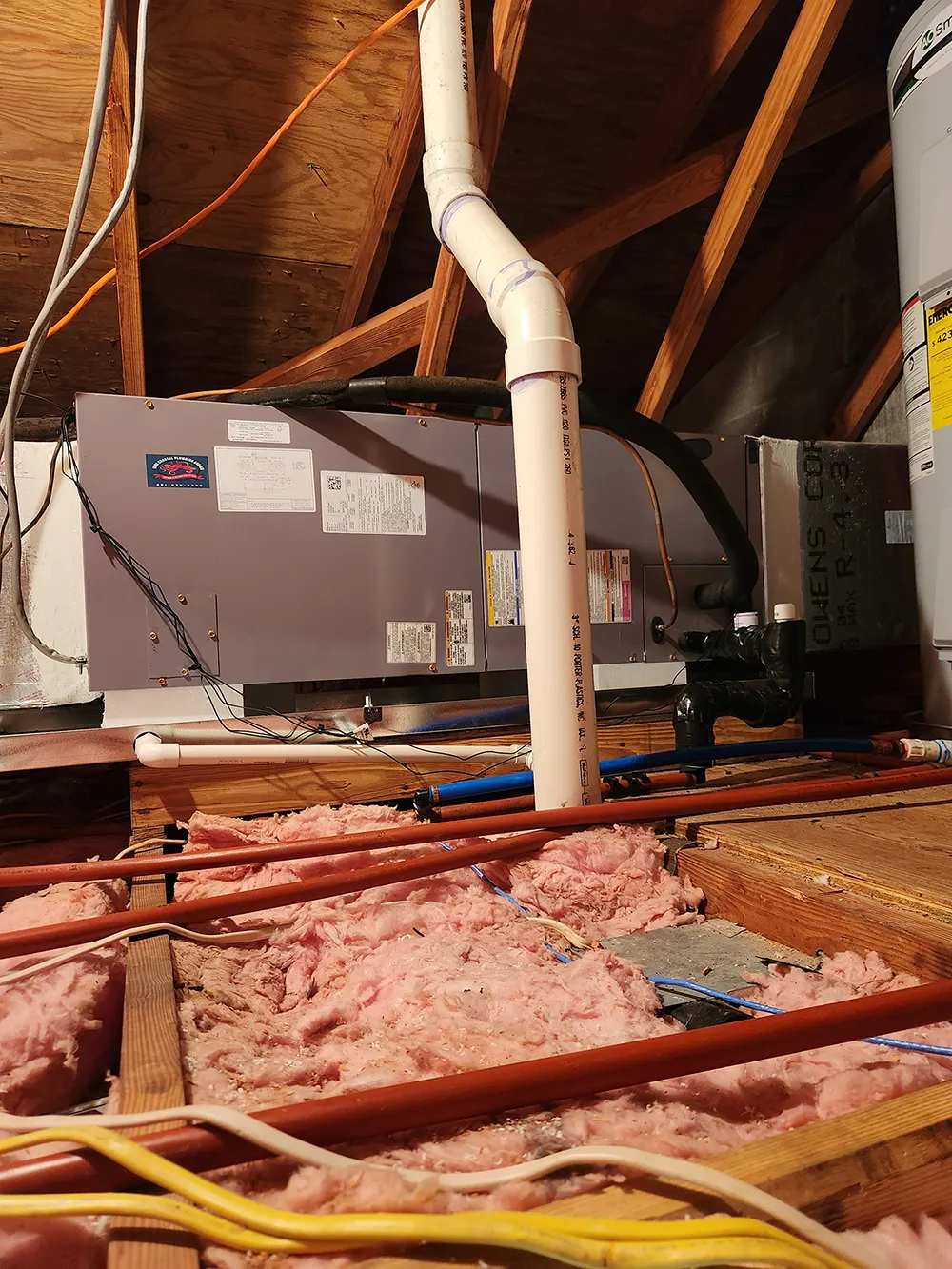
Humidity and garage installs. Many Baldwin County water heaters sit in a garage or an unconditioned utility closet. Constant coastal humidity accelerates corrosion on tank jackets, fittings, and the drain valve. A wall-mounted tankless unit removes the single largest thing that can dump 50 gallons onto your floor.
Do not let anyone talk you into tankless automatically. A conventional tank is the better decision when:
There is no honest flat price, because the variables do most of the work. What actually moves your number:
One 2026 note worth flagging: the federal 25C Energy Efficient Home Improvement Credit, which covered heat pump water heaters, expired on December 31, 2025. Installations completed in 2026 are not eligible. If a contractor is still quoting you a federal credit on a new water heater this year, ask them to show you the current rule. Make the decision on operating cost and service life instead.
Call before it fails, not after:
A water heater that fails while you are at the beach or away for the season can put 50 gallons through your subfloor. That damage costs many times what a planned replacement does.
For gas-equipped homes and for vacation rentals, yes. Warm Gulf Coast groundwater means a tankless unit performs at close to its rated flow year-round, and the roughly 20-year service life is about double that of a tank. For all-electric homes on a 150-amp panel, the required electrical upgrade often makes a high-efficiency tank the better value.
Conventional tanks typically last 8 to 12 years, and often land at the shorter end here because coastal humidity and sediment accelerate corrosion. Tankless units commonly reach around 20 years when they are descaled annually.
No. Both gas and electric tankless units require electricity for ignition and controls, so they stop producing hot water when the power goes out. A gas tank with a standing pilot will still hold a tank of hot water. If outage resilience is a priority, discuss a generator circuit or plan around it.
Yes — an annual descaling flush. Homes on private wells in Elberta, Silverhill, or Magnolia Springs should flush yearly without exception, because mineral scale is the main thing that shortens a tankless unit's life. Skipping it can void the manufacturer's warranty.
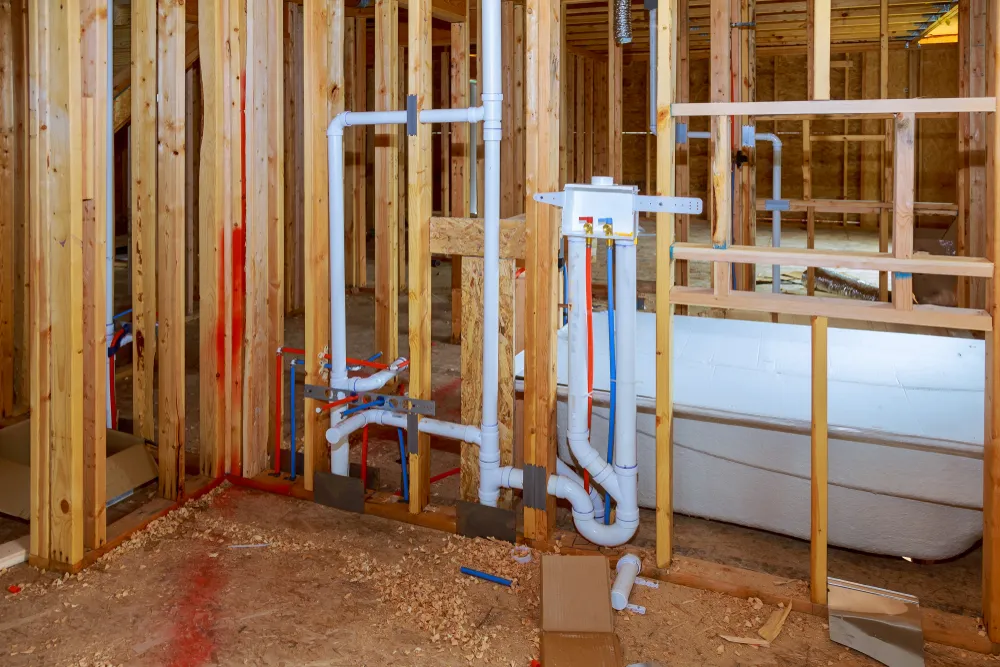
Water heater replacement involves gas connections or 240-volt wiring, temperature and pressure relief valve sizing, venting, and permitting. Alabama requires licensed plumbers for this work, and most manufacturer warranties are void without professional installation. It is not a DIY project.
For a like-for-like tank replacement, same-day is often possible. Tankless conversions require a load and gas-line assessment first, so those are typically scheduled.
Gone Coastal Plumbing and Air has been handling water heater replacement across Baldwin County for over 20 years, with a 4.9-star rating from more than 185 neighbors. We will tell you plainly whether tankless makes sense for your home — including when it does not.
We serve Foley, Gulf Shores, Orange Beach, Daphne, Fairhope, Robertsdale, Silverhill, Fort Morgan, Elberta, Perdido Beach, Lillian, Summerdale, and Magnolia Springs.
Call or text (251) 979-9396 for a straight answer on your water heater. If yours is leaking right now, shut off the water supply and call our emergency plumbing line — nothing is beyond our reach.
We offer 24/7 emergency services! Our team is ready and eager to assist you with any inquiries you may have. At Gone Coastal, nothing is beyond our reach.