Call/Text (251) 979-9396 or Click Here to Book Now!

Do the real repairs now. Peak summer season has ended, and the Gulf Shores and Orange Beach tourism bureau puts snowbird season at January through March with many early arrivals in October and November. That gap is the only stretch a unit can go offline without costing a booking. Miss it and the next honest window is spring.
This is calendar arithmetic. Count the weeks between your last summer guest and your first winter tenant.
A rental in Gulf Shores is used harder than a home, by more people, none of whom own it.
Kitchen drains take grease and food from guests who cook one big meal and leave. Toilets take wipes, paper towels and things nobody flushes at home. Disposals get shrimp shells and corn husks. Fixtures cycle constantly, six showers in a morning instead of two.
The parts nobody sees work hardest. Supply lines, angle stops and fill valves see in one summer what a private home's see in years. Then they fail: a valve that runs, a stop that weeps, a flapper that never seats.
Our vacation rental plumbing post covers those failures; this one covers when to fix them.
Sand is what makes a beach rental drain unlike a drain in Robertsdale. Guests carry it in suits, hair, feet and bags rinsed out in the tub, by the pound across a season.
Sand does not behave like hair or soap. It is heavy and it will not stay suspended. It drops out the instant the water slows, so it settles in the P-trap under the shower, in the low spots of the branch line, and in any belly in the lateral running to the main. It builds up rather than passing through.
The failure is gradual and then sudden. The trap fills a little each week, flow slows all summer, nobody reports it, and one week in a full unit it stops. That is why drain cleaning here is scheduled, not reactive.
Because in season you are not fixing plumbing. You are making the unit rentable before a 4 p.m. check-in.
That call is rational. With a guest arriving, the fastest path back to functional is the right one, and every manager in Orange Beach makes it weekly.
The problem is accumulation. By September the unit carries a list: the slow guest shower, the humming disposal, the heater that recovers slowly, the angle stop somebody tightened instead of replaced. Together they are the unit's actual condition.
The economics are simple. A failure during an occupied week costs a refund, a review that sits on your listing for years and an emergency call. The same repair in October costs one scheduled visit on an empty unit.
Fall windowIn seasonCost driversScheduled visit, normal hours, one tripEmergency call, after hours, repeat tripsBooking impactNone, the unit is between seasonsLost nights, refunds, a cancelled stayGuest experienceNobody is there to have oneA guest on vacation writing a reviewWhat is possibleCamera the line, pull traps, replace instead of patchWhatever works before check-in
Against a backup mid-stay. Main line and lateral condition, checked with a camera instead of guessed at. Trap and drain cleaning at every shower, tub and kitchen sink before the sand and grease consolidate. If the camera finds roots, offsets or a belly holding sand, that is sewer line territory, better known in October than in February. Our main sewer backup post shows what that looks like mid-stay.
Against a flood. Supply lines and angle stops at every fixture, replaced where corroded rather than tightened. Toilet internals: fill valves, flappers, supply connections. Washing machine hoses, which ran several loads a day all summer. See our posts on corroded shutoff valves and hose failures.
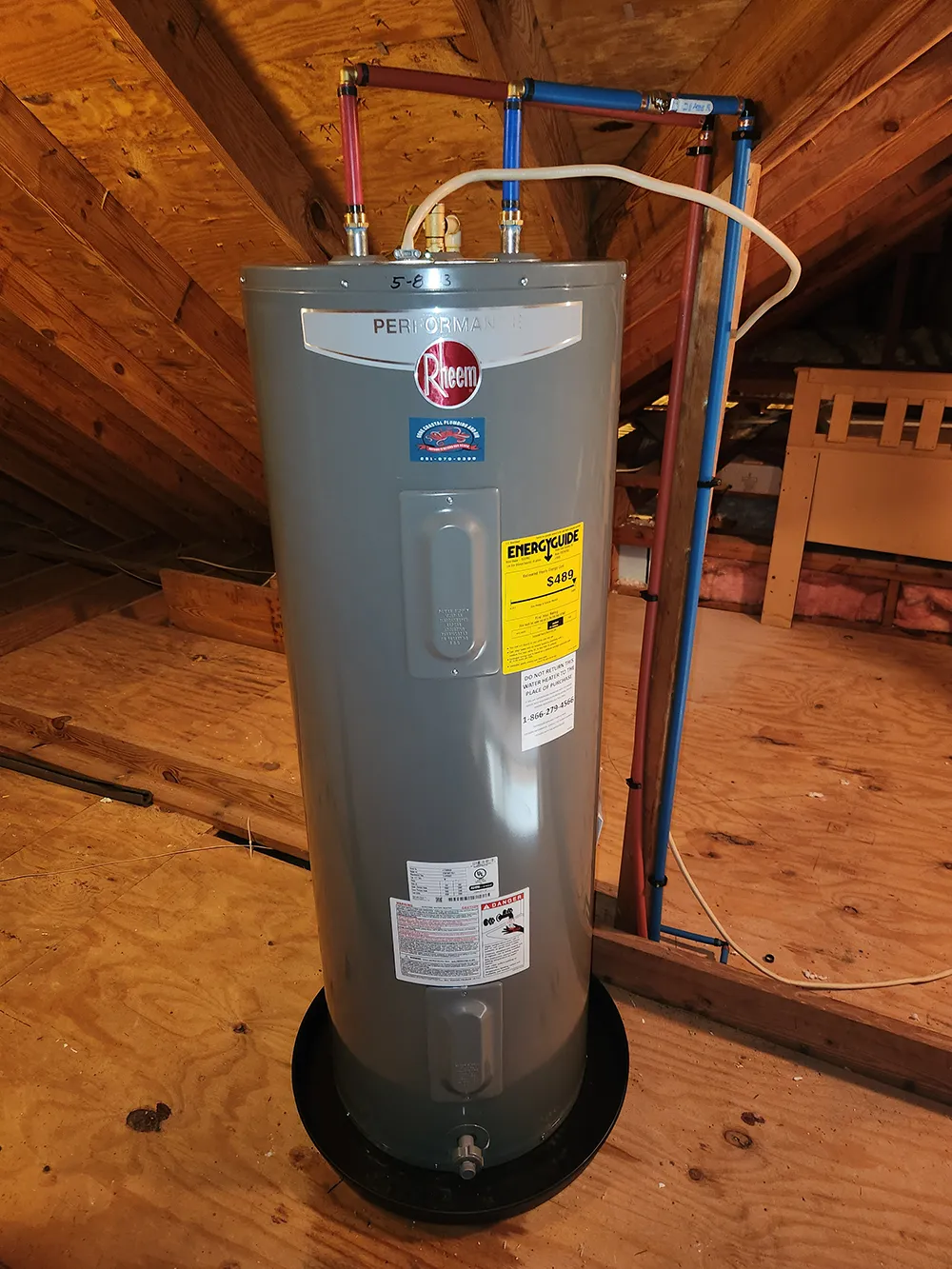
For hot water. Water heater condition after a season of hard use: sediment, anode rod, thermostat behavior, recovery time.
For your ability to respond. Shutoff function at every fixture, plus a documented main shutoff a manager can reach and turn. A valve nobody has closed in six years is not a shutoff, it is a decoration.
A snowbird staying three months is not a heavier weekend guest. They are a different user.
Use gets steadier and gentler: no six-people-at-once showers, no crab shells in the disposal, far less sand. But it becomes continuous, and it happens in front of someone who notices.
A weekend guest never registers a toilet that runs for ninety seconds, a slow shower drain, or a heater that quits halfway through the second shower. A tenant living there twelve weeks notices all of it by day three and calls by week two. Tolerable problems become daily complaints, and that shift is the real deadline.
Plenty. A window spent on the wrong work is money wasted more comfortably.
Do not replace a water heater that is performing fine. Age alone is not a failure. If it recovers normally, holds temperature and shows no corrosion at the fittings or a weeping tank, leave it and reassess next fall.
Do not repipe a unit you are about to sell. That belongs to whoever owns it next, unless you have an active leak or a stated insurance requirement.
Do not hydro jet a line a camera shows is clean. Jetting is right for a line packed with grease, scale or sediment, and a hard-used rental lateral often qualifies. But the honest sequence is camera first, then decide. A shop that recommends jetting before looking is guessing with your money. Our hydro jet post covers when it earns its place.
Spend the window on what the inspection actually found.
The fall shoulder window. Peak summer season has ended and the tourism bureau puts snowbird season at January through March, with many early arrivals in October and November. Those weeks are the only stretch when a unit can go offline without losing a booking, so real repair replaces the workaround.
Sand. Guests carry it off the beach in suits, hair and bags, and unlike hair or soap it is heavy enough to drop out of moving water. It settles in P-traps and low spots along the lateral and accumulates all summer rather than passing through, so flow degrades quietly and then stops.
Only if a camera inspection shows it needs it. Jetting is the right answer for grease, scale and packed sediment, and rental laterals here often qualify. But the sequence matters: look first, then decide. A shop recommending jetting without inspecting the line is guessing at your expense.
No. Age by itself is not a reason. Check recovery time, temperature stability, corrosion at the fittings and any sign of a weeping tank. A unit performing normally can stay. One that struggles to deliver a second shower becomes a daily complaint with a three-month tenant.
Use gets gentler but continuous, and it happens in front of someone paying attention. A running toilet, a slow drain or a weak second shower goes unnoticed by a weekend guest and becomes a standing complaint by week two of a twelve-week stay. Fix the small things before the handoff.
If you manage rentals in Gulf Shores, Orange Beach, Fort Morgan or anywhere in Baldwin County, this is the window. We have worked this coast for over 20 years. Start with drain cleaning and a camera on the main, or see all our plumbing services. If the unit sat closed instead of rented, read reopening a seasonal home, then add freeze prep and, for pier-and-beam units, crawl space plumbing. Nothing is beyond our reach.
We offer 24/7 emergency services! Our team is ready and eager to assist you with any inquiries you may have. At Gone Coastal, nothing is beyond our reach.