Call/Text (251) 979-9396 or Click Here to Book Now!
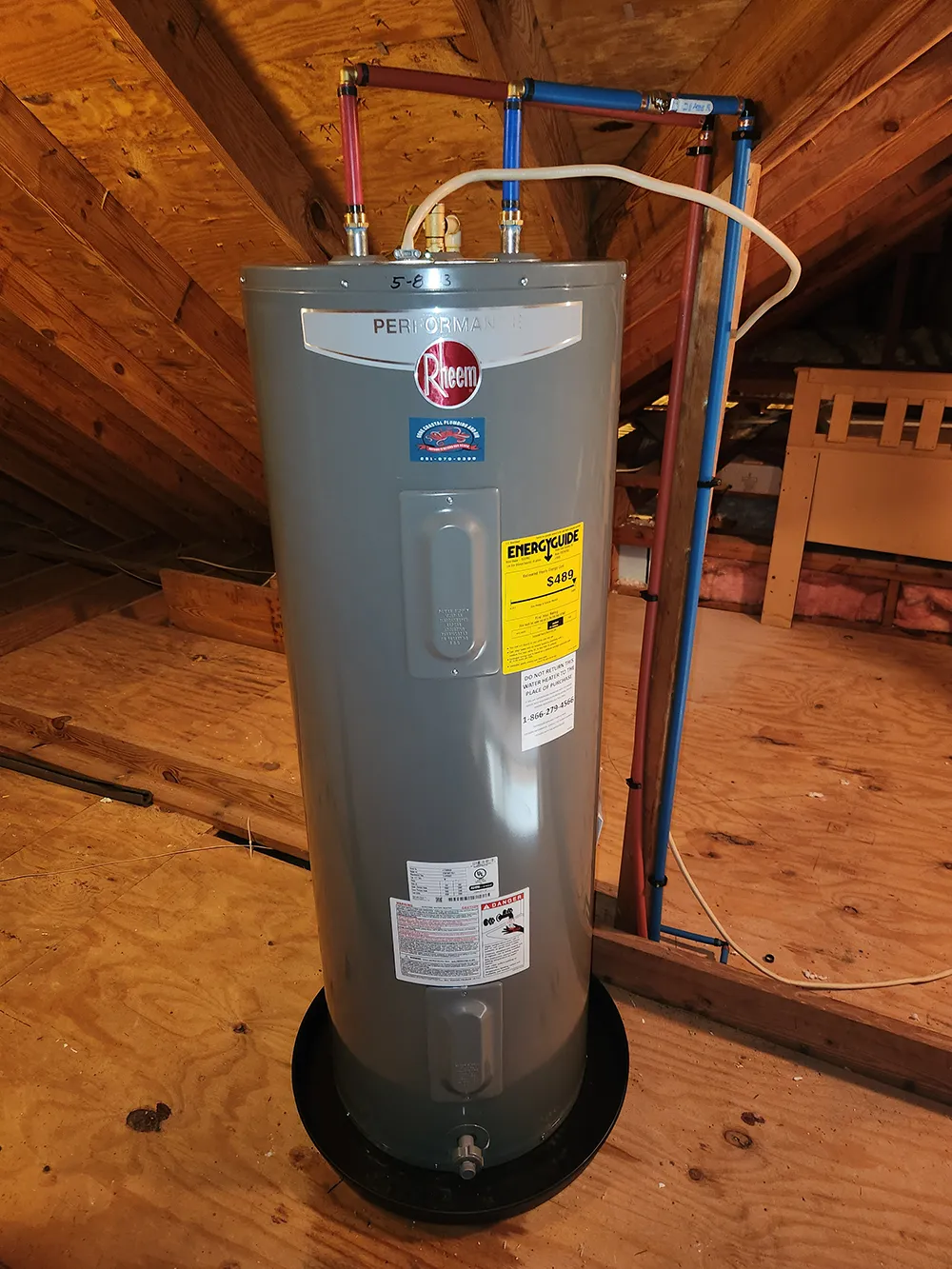
A small puddle near the base of your water heater is a warning sign that requires immediate attention. Many homeowners in Foley and Baldwin County assume that a small amount of standing water is just normal condensation caused by our coastal humidity. However, when a tank begins to weep from the bottom, it usually indicates a much more serious problem.
When water pools around the base of a traditional tank water heater, the inner steel lining has likely failed. Over time, municipal water minerals and natural sediment build up inside the tank. This sediment accelerates corrosion, eventually eating through the steel. Once the tank lining is compromised, the leak cannot be patched. A complete tank rupture is often imminent, which can cause significant water damage to your garage, utility closet, or surrounding drywall.
If you discover a leak at the base of your water heater, do not attempt to drain the tank or apply DIY patches. Your first step is to shut off the cold water supply valve located on the pipe directly above the unit. This stops the flow of incoming water and minimizes further flooding. Next, shut off the power to the unit at the breaker box (for electric models) or turn the gas valve to the “off” position (for gas models).
A leaking water heater base almost always requires a full unit replacement. If your water heater is over ten years old, or if you notice rust-colored water, loud popping noises during operation, or a sudden drop in hot water capacity, the system has reached the end of its lifespan.
Gone Coastal Plumbing and Air provides professional water heater assessment and replacement across Baldwin County. Our licensed plumbers can safely remove the failing unit, address any code requirements, and install a new, energy-efficient system to restore your home’s hot water safely. Book an inspection today before a small puddle turns into a major flood.
We offer 24/7 emergency services! Our team is ready and eager to assist you with any inquiries you may have. At Gone Coastal, nothing is beyond our reach.