Call/Text (251) 979-9396 or Click Here to Book Now!
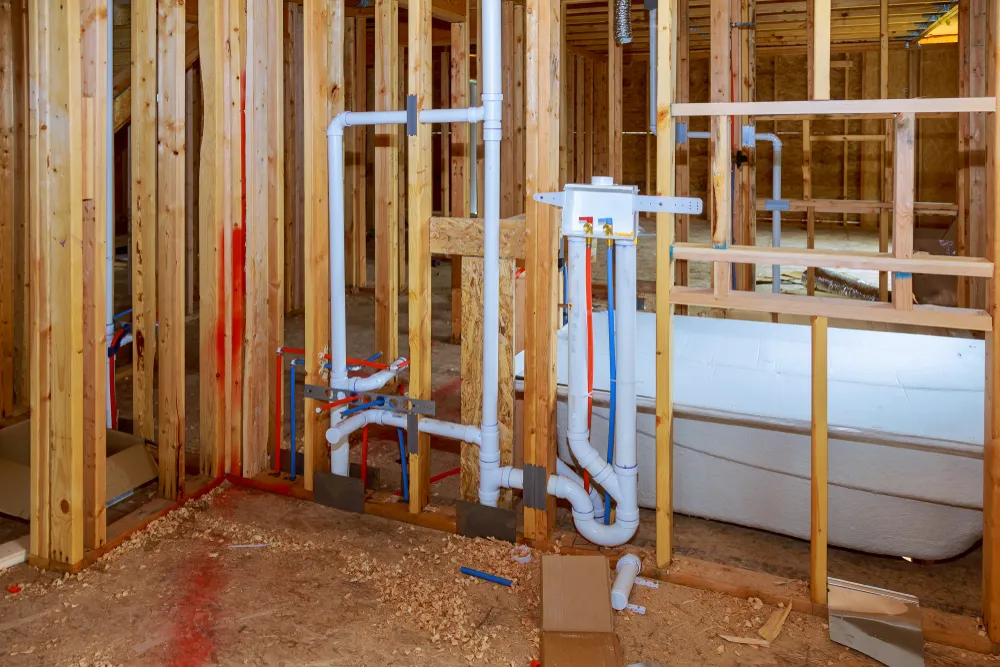
A shower that leaks inside the wall almost always fails in one of four places: the valve behind the handle, the supply connections to that valve, the shower arm where the head attaches, or the drain. A leak that shows up only while the shower runs points to the drain, the arm or the tile and grout. A leak that never stops points to the valve or its supply lines, which are under constant pressure. Either way, the water you see is usually a fraction of the water inside the wall.
Leaking showers come up in our reviews more than almost any other repair. "Repairing a leaky shower inside the wall." "I had a leak in my shower and was without water for 2 days." "Fixed a leaking tub drain." It is one of the most common plumbing problems in Foley, Gulf Shores and Orange Beach homes, and it is one of the easiest to underestimate.
The leak itself hides behind tile and drywall. What you notice is the damage it causes:
The last one matters. If your water meter's leak indicator moves with every fixture off, the leak is on the pressurized side of the plumbing, and in a shower that means the valve or the lines feeding it.
This is the single most useful question for narrowing down a shower leak, and you can answer it yourself.
A simple test: fill the tub a few inches (or plug the shower drain and add water) without running the shower head. If the stain below gets worse, the drain is the problem. If it does not, run the shower with the head pointed away from the walls and check again. That points you toward the arm or the valve.
The valve behind your handle mixes hot and cold water. Its internal seals and cartridge wear over time, and when they fail, the leak can go out the spout or straight into the wall cavity. Model plumbing codes require shower valves to be pressure-balancing or thermostatic so a flushed toilet does not scald whoever is showering, and those mechanisms have parts that wear. A handle that has become stiff, a shower that drips after you turn it off, or a temperature that drifts are all early warnings.
The hot and cold lines connect to the valve inside the wall. A failed soldered joint, a loose threaded fitting or a corroded copper connection will leak constantly. Coastal Baldwin County's soft, mildly acidic water is hard on copper over the long run, so older copper connections deserve suspicion.
The arm that comes out of the wall threads onto a fitting inside it. If that joint loosens or the threads were never sealed well, water runs back along the arm and down inside the wall every time the shower is on.
Tub and shower drains seal to the pipe below with a gasket or putty. When that seal fails, water escapes under the tub or pan instead of going down the pipe. This is the classic cause of a ceiling stain under an upstairs bathroom.
Sometimes, and it is worth checking first. Failed caulk where the tub meets the tile, or open grout lines on a shower floor, let water behind the tile without any plumbing failure at all. Re-caulking costs very little.
But caulk does not fix a valve, a supply line or a drain gasket. If you re-caulk and the damage keeps spreading, or the meter test shows a constant leak, stop sealing over it. Caulk over an active plumbing leak just hides the evidence while the wall keeps getting wetter.
It depends on the source, which is why accurate diagnosis comes first.
The goal is the smallest opening in the least visible place. A good repair also leaves you with a way back in next time. Many homeowners choose to have an access panel installed so the valve can be serviced without touching the tile again.
If the leak has gone on long enough to soak framing, subfloor or insulation, the plumbing repair is only step one. Wet materials need to be dried, and anything with mold growth needs proper remediation. We do not do mold remediation or structural repair, and we will tell you plainly when you need someone who does. Fixing the leak first stops the damage from getting worse while you line that up.
And if the problem turns out to be caulk or grout alone, a tile professional or a careful homeowner can handle it. You do not need a plumber to re-caulk a tub.
Look for bubbling paint, soft drywall, loose tile or a stain on the ceiling below. Then turn off all water and check your meter's leak indicator. If it moves, a pressurized line or the valve is leaking. If damage appears only after showers, the drain, shower arm or grout is the more likely source.
A drip that continues after the shower is off usually means the valve cartridge or its seals are worn. Water is getting past the closed valve. Left alone, worn cartridges can also leak into the wall cavity, so it is worth replacing the cartridge before the problem spreads behind the tile.
Yes. A failed drain gasket lets water escape under the tub or shower pan every time it drains. In a two-story home or a condo, that water often shows up as a stain on the ceiling below. Filling the tub without running the shower head and checking the stain is a quick way to confirm it.
Only if the caulk or grout was the problem. Failed caulk at the tub edge can let water behind the tile, and re-caulking fixes that. It will not fix a leaking valve, supply connection, shower arm or drain. If damage keeps spreading after re-caulking, the leak is in the plumbing.
Not usually. Cartridges can often be replaced from the front. Many valve and supply repairs can be reached through a small opening on the back side of the wall, especially if a closet backs up to the shower. Installing an access panel afterward makes future service easier.
There is no safe amount of time. Even a slow leak keeps drywall, framing and insulation damp, and Gulf Coast humidity slows drying. Damage and mold risk grow the longer it runs, so it is best to diagnose a suspected shower leak as soon as you notice signs.
Gone Coastal Plumbing and Air repairs shower valves, drains and in-wall leaks across Foley, Gulf Shores, Orange Beach, Daphne, Fairhope, Robertsdale, Silverhill, Fort Morgan, Elberta, Perdido Beach, Lillian, Summerdale and Magnolia Springs. Licensed Alabama master plumber MP-3978, BBB accredited, 20+ years in the trade.
Call/Text (251) 979-9396 or Click Here to Book Now!
Related reading:
We offer 24/7 emergency services! Our team is ready and eager to assist you with any inquiries you may have. At Gone Coastal, nothing is beyond our reach.